Lital Szmuk Fabian
Rami Bar Maor
Dani Karavan
Amit Geron
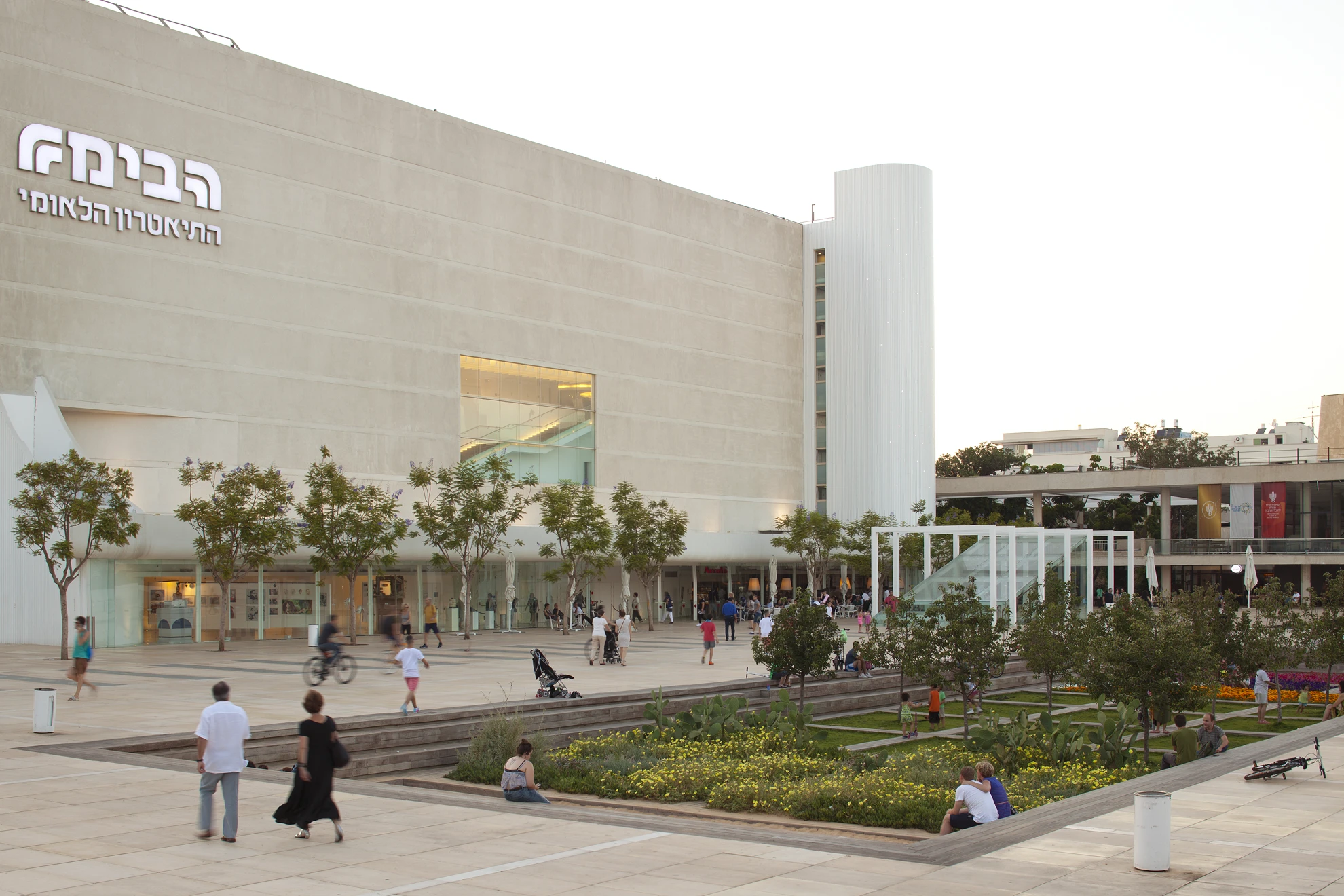
HaBima Square (Culture Square) is located at the heart of Tel Aviv’s cultural center and includes Mann Auditorium (Heichal HaTarbut), Yaakov Garden, the HaBima National Theatre, and the sculpture Elevation. Beneath the square lies a large underground parking facility. The square was designed by the artist Dani Karavan as an environmental sculpture and an urban garden, paying tribute to the days of “Little Tel Aviv” while simultaneously creating new urban connections between Rothschild Boulevard and Chen Boulevard.
Lital Szmuk Fabian
Rami Bar Maor
Dani Karavan
Amit Geron
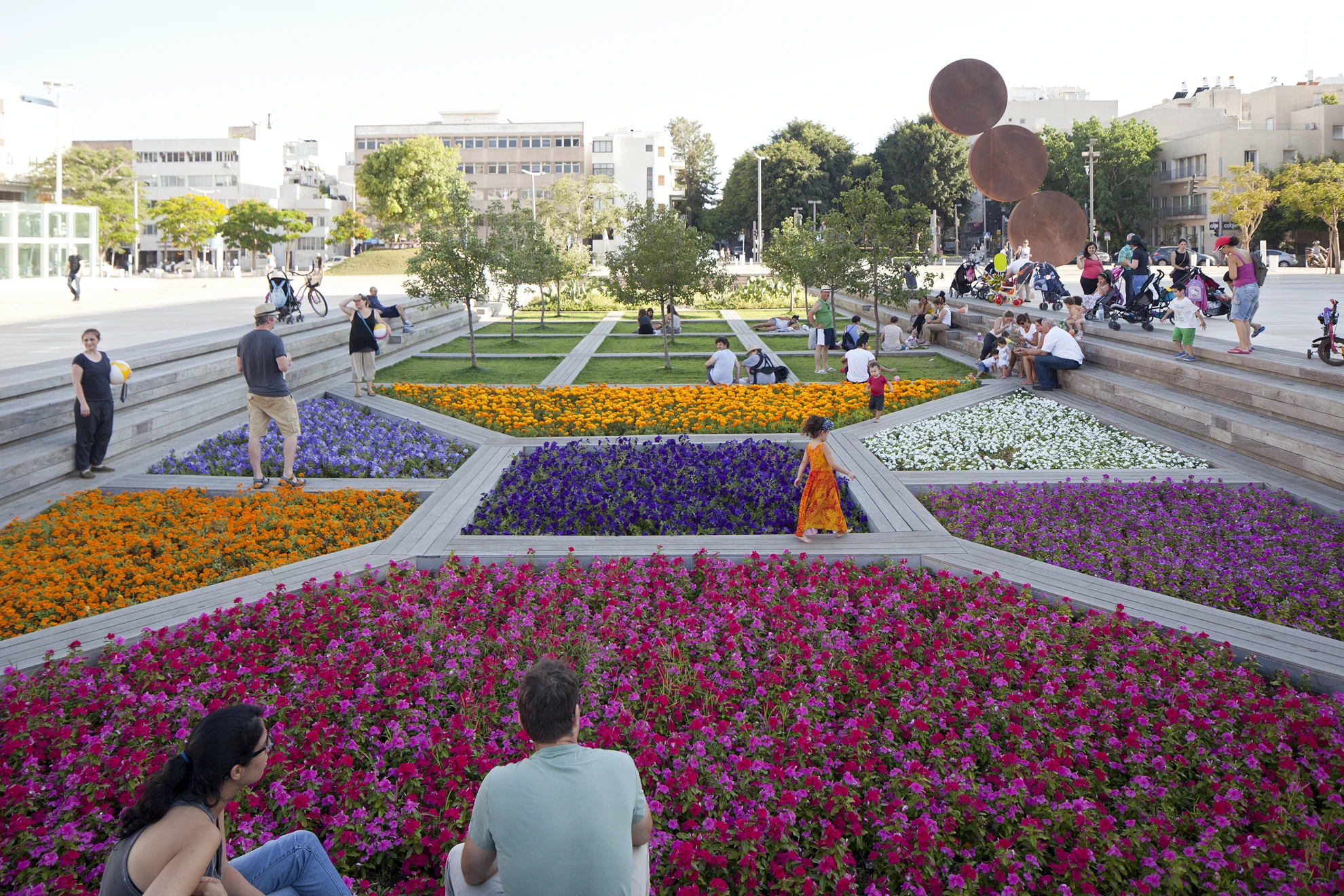

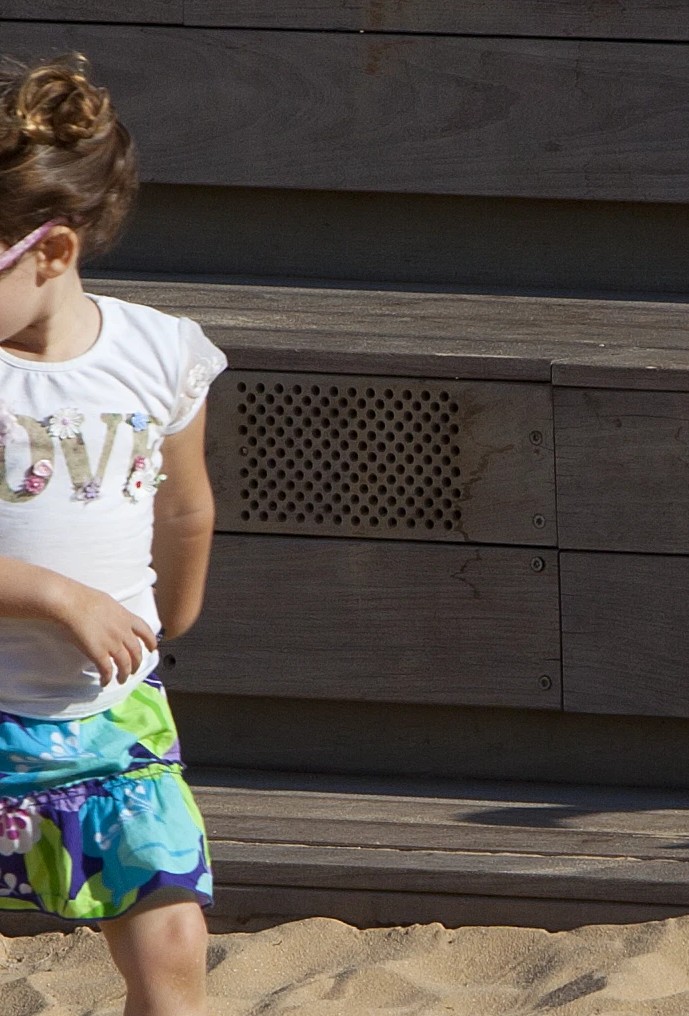

The design is characterized by a complete symbiosis between the underground parking structure and the sculptural and landscape elements that compose the square. Memories from Dani Karavan’s childhood in Tel Aviv are expressed through landscape and vegetation elements that once existed in the area prior to the city’s development and the construction of buildings on the site.
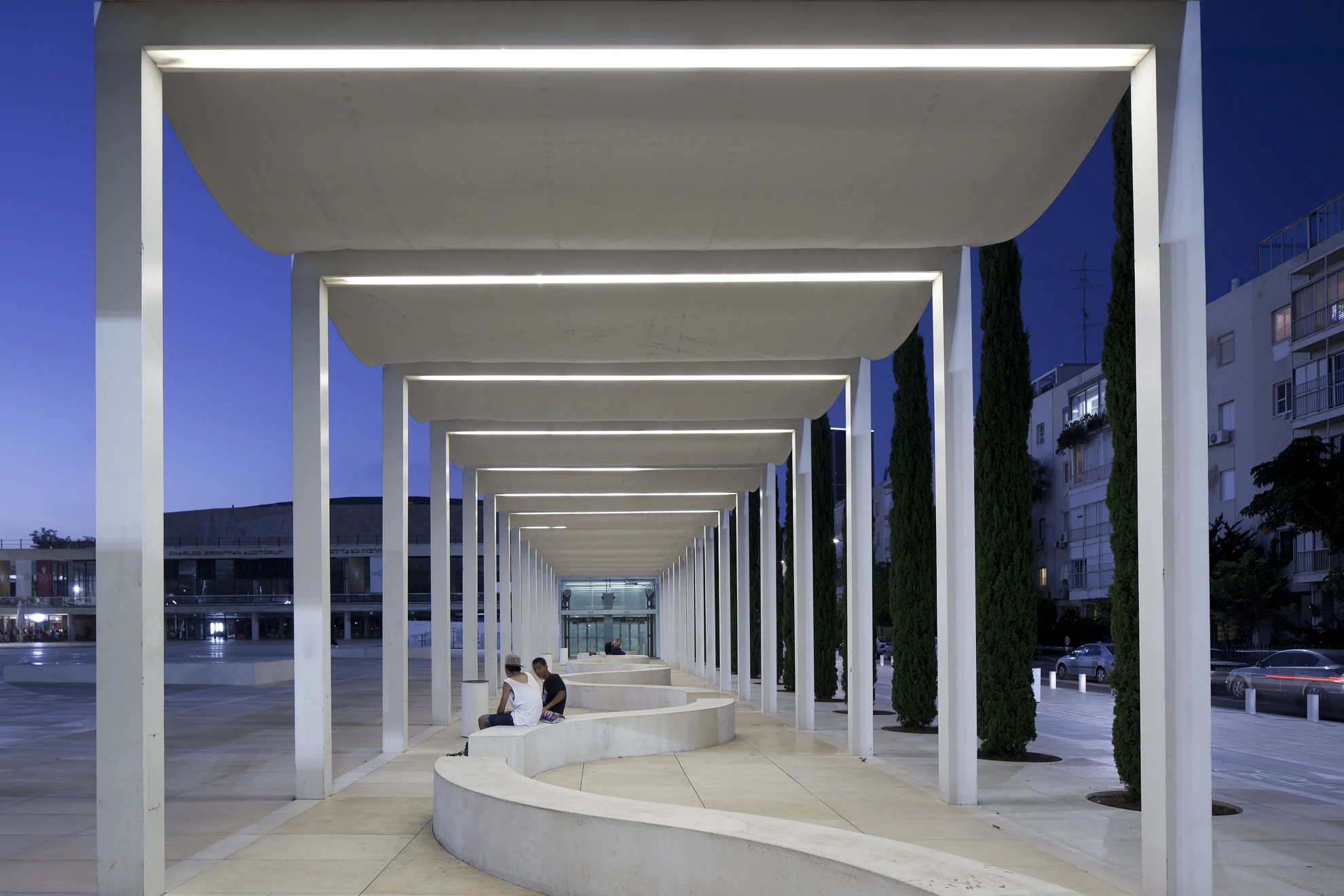
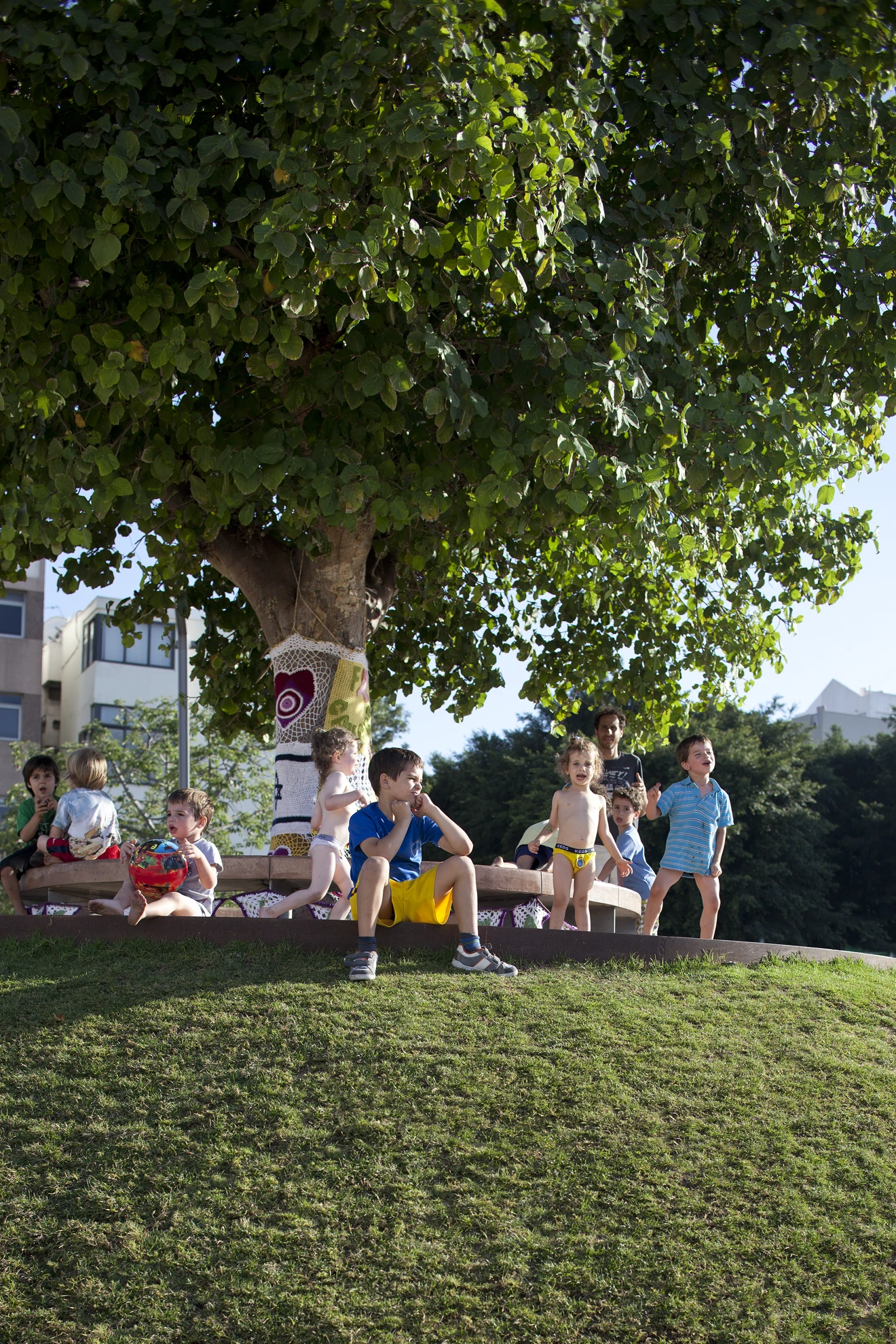
Along Huberman Street, a sequence of gates accompanied by a row of cypress trees connects the entrances and exits of the underground parking facility with the square above. At the southeastern corner of the square, on a raised mound, a large sycamore tree was planted as a replica of the sycamore trees that once grew in Yaakov Garden.


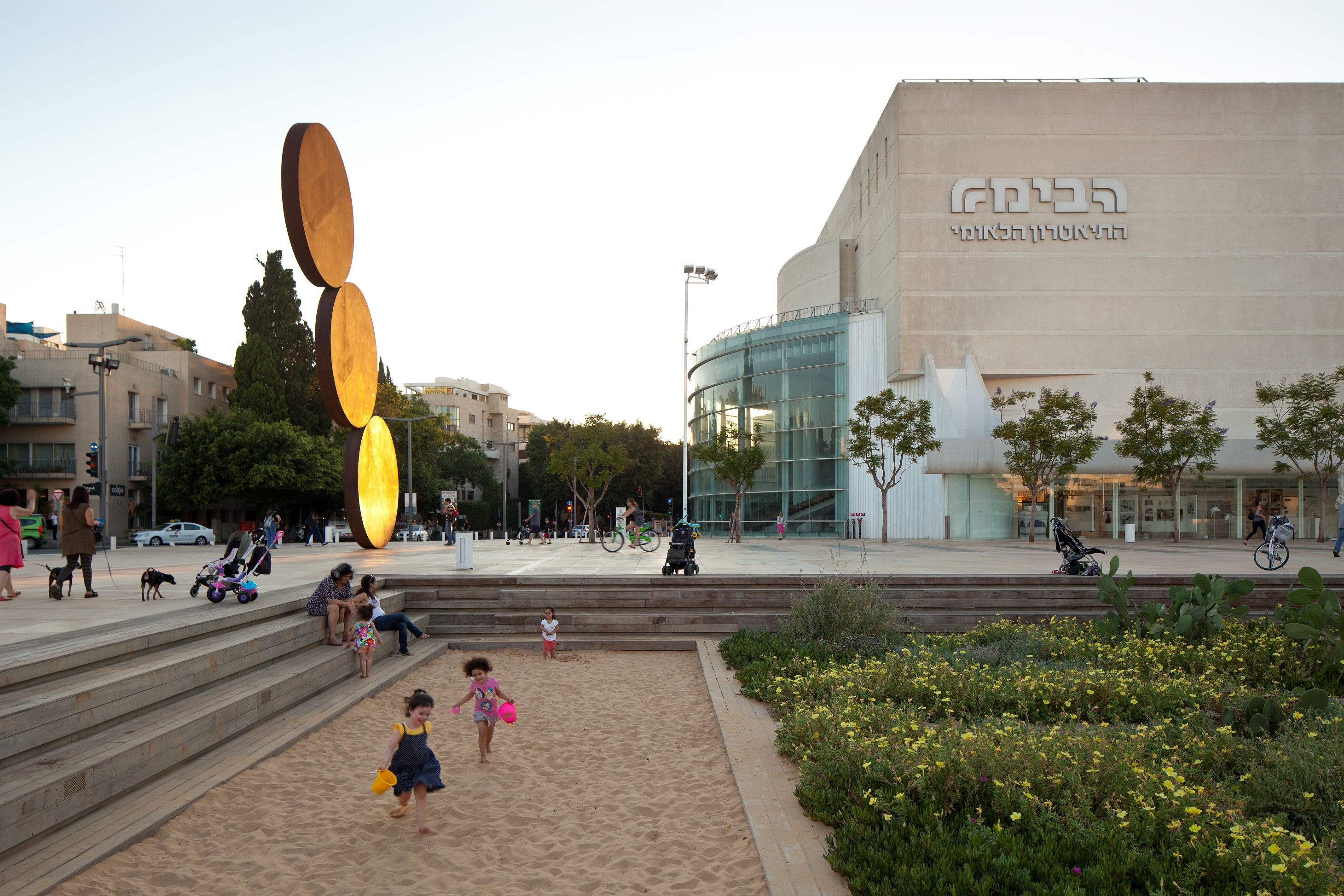
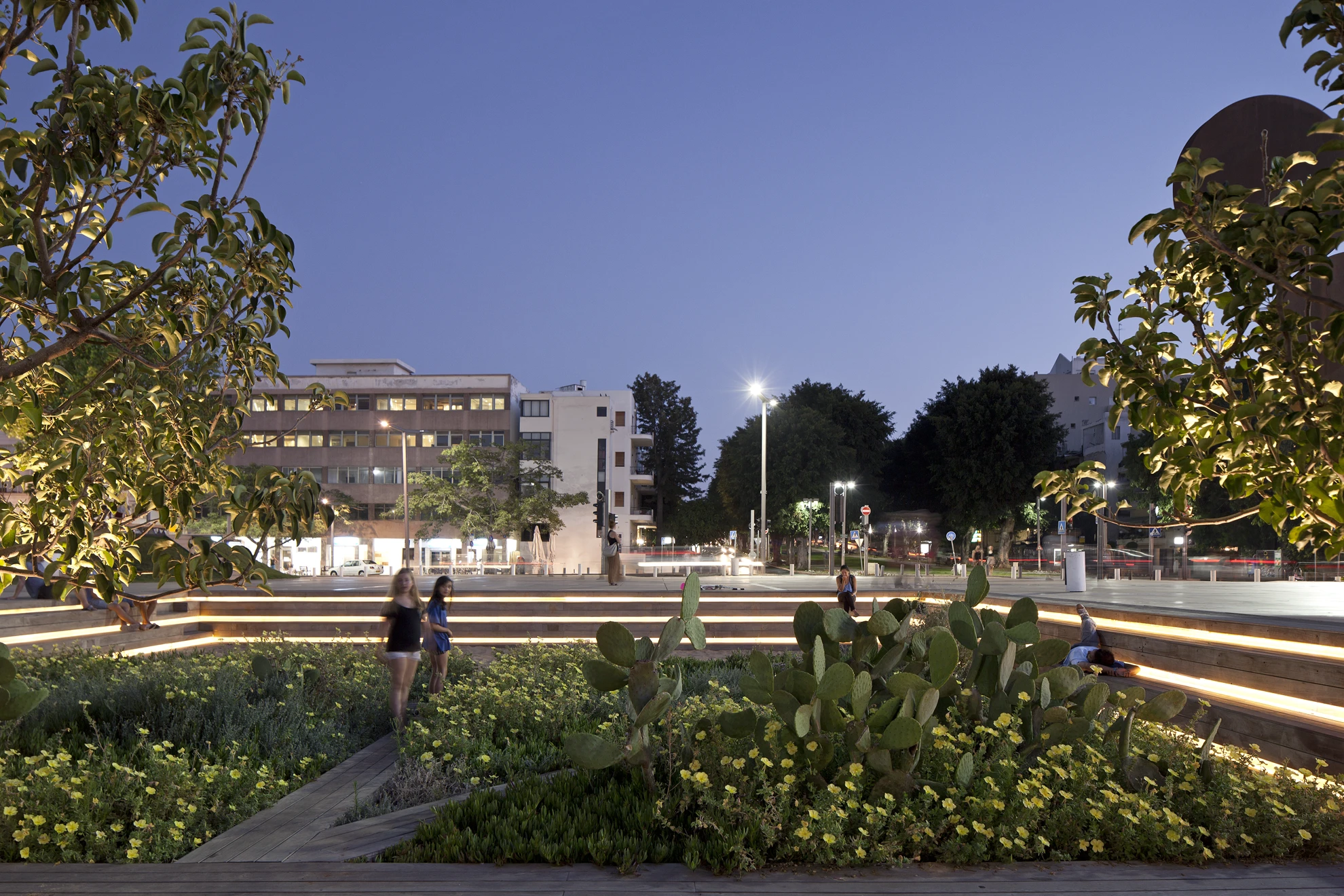
Approaching from Rothschild Boulevard, the square is revealed as a large-scale urban mosaic, simple in form and colored in hues reminiscent of sand. At its center lies a sunken garden surrounded by stepped seating. The garden is divided geometrically according to the grid of HaBima Square and the Cultural Hall.
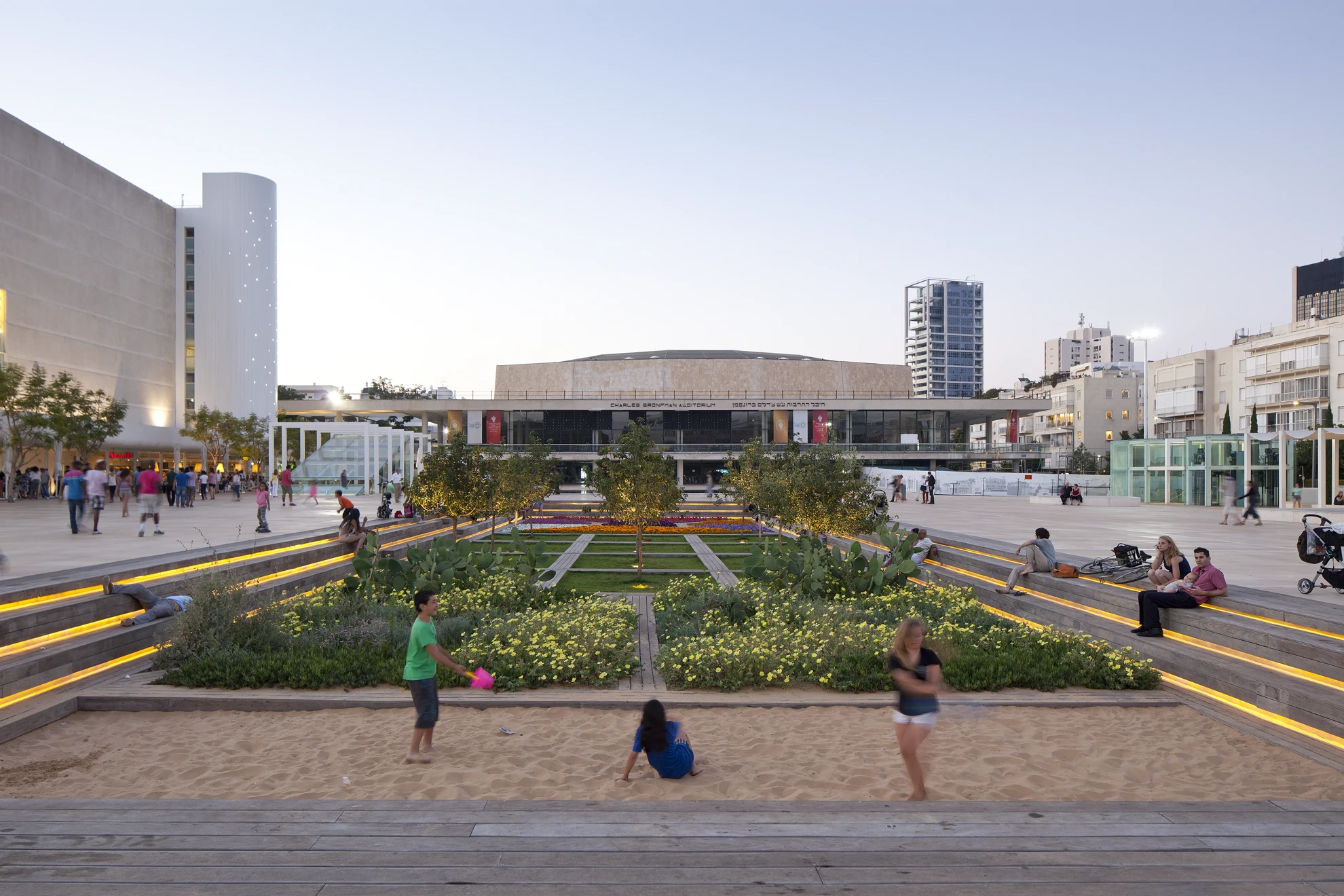
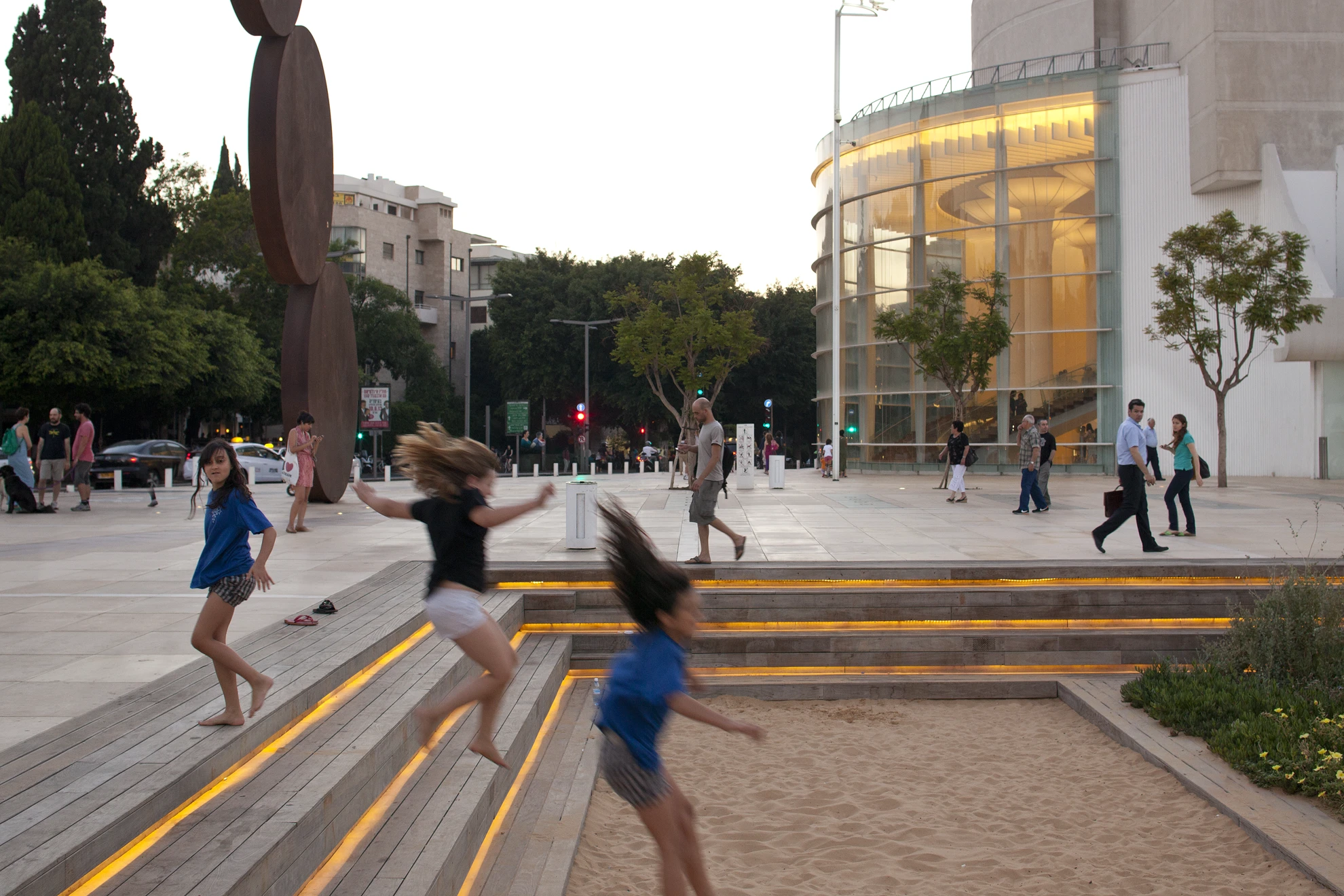
Its southern section features a “Sand Garden” composed of dune vegetation, evoking Tel Aviv’s original sand dunes; at its center stands a grove of almond trees, recalling the almond orchards that once occupied the site; and in its northern part, a garden of colorful seasonal flowers commemorates the nursery that formerly operated there.
Extending from the garden is a reflecting pool facing the Cultural Hall, alongside a series of small stages designed for intimate performances.